100 ARCHIVES

Industrial Heritage


Industrial Heritage
Industrial Heritage

Brunner & Mond: The Foundations of Imperial Chemical Industries

Introduction: The Chemical Architectonics of Northern England

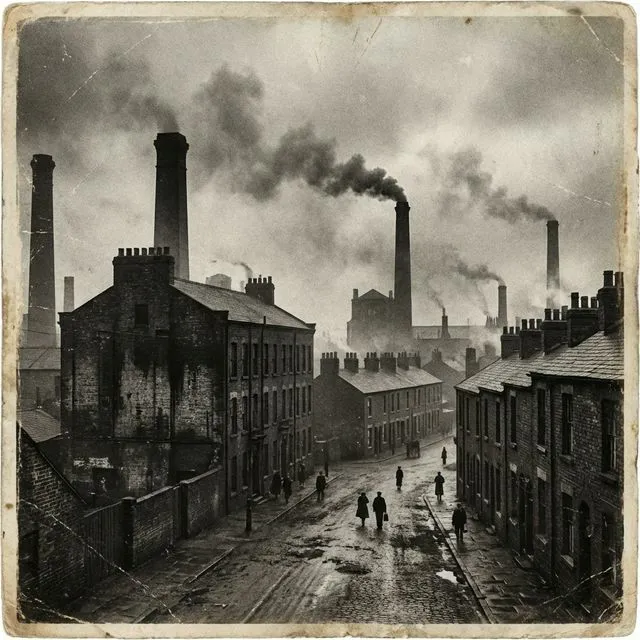
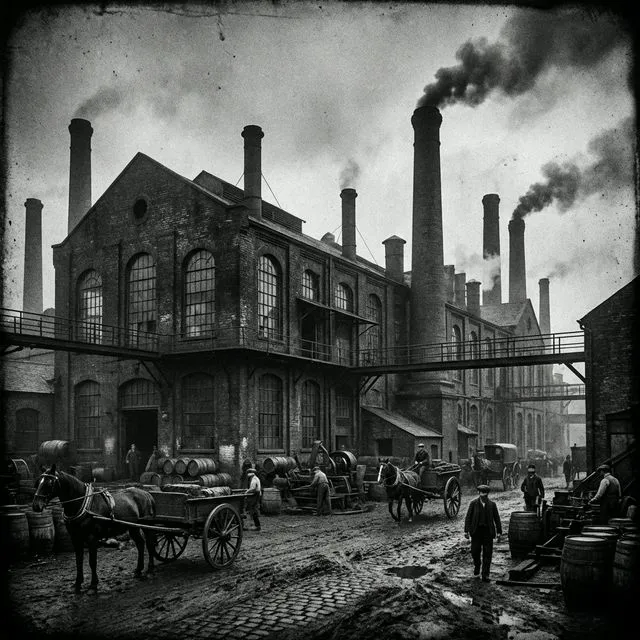
The trajectory of the British chemical industry in the late nineteenth century represents more than a mere shift in production methodologies; it constitutes a fundamental reorganization of industrial capitalism, spatial geography, and labor relations. At the heart of this transformation lies the partnership established in 1873 between John Tomlinson Brunner and Ludwig Mond. Situated in the verdant yet industrially potent Weaver Valley of Cheshire, Brunner, Mond & Co. did not simply introduce a new chemical process to the British Isles; they constructed a corporate edifice that would eventually serve as the foundation for Imperial Chemical Industries (ICI).

IND-1873-BM Read Record →
Industrial Heritage
Industrial Heritage

Building the Tyne Bridge: A Symbol of Northern Resilience

Introduction: The Industrial Geography of the River Tyne

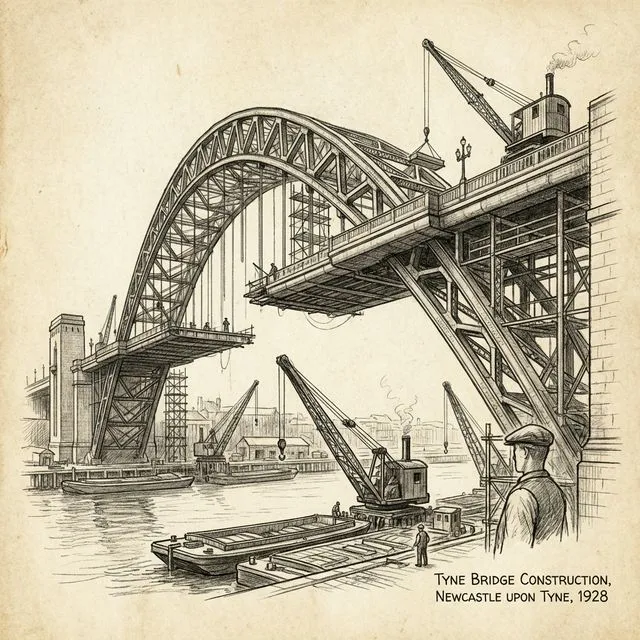
For two millennia, the River Tyne has served a dual purpose in the geography of North East England. Carving its path through the rugged topography of the region, it has acted as a formidable physical boundary separating the settlements of Newcastle and Gateshead. Simultaneously, it functioned as the primary commercial artery for the British Empire, a waterway that pumped the lifeblood of the nation - coal and ships - out to the rest of the globe. However, by the dawn of the twentieth century, the gorge of the Tyne presented a severe logistical paradox that threatened to strangle the region’s development.

IND-1928-TB-NE Read Record →
Industrial Heritage
Arts and Culture

L.S. Lowry: Capturing the Industrial Soul

The Enigma of the Matchstick Man

In the grand narrative of twentieth-century British art, Laurence Stephen Lowry (1887–1976) stands as a singular, often paradoxical figure. To the wider public, he is an affectionate icon, the man who immortalized the soot-choked skyline of the industrial North and populated it with his famous “matchstick men.” These figures became the visual shorthand for the working-class experience in mid-century England - a dialect of paint that spoke of clogs, shawls, and the factory whistle. Yet, within the corridors of the art establishment, Lowry has historically been viewed with a degree of skepticism, frequently categorized as a “Sunday painter,” a primitive talent, or a parochial eccentric whose artistic vision was limited to the mill gates of Lancashire.

IND-1914-LSL Read Record →
Industrial Heritage
British History

The Birtley Belgians: A Sovereign Enclave in County Durham

Introduction: An Anomaly of War

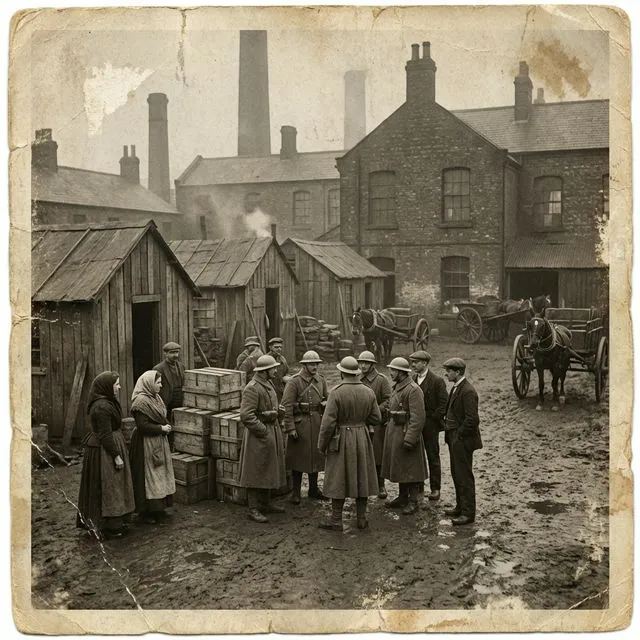
In the vast and tragic history of the First World War, few stories are as peculiar or as significant as that of the “Birtley Belgians.” While the conflict is usually remembered for the static horror of the trenches or the grand geopolitical maneuvers of the Great Powers, a unique experiment in transnational cooperation was unfolding in the industrial heartland of Northern England. Here, in Birtley, County Durham, a piece of foreign territory was effectively carved out of the British landscape.

IND-1873-BM Read Record →
Industrial Heritage
Industrial Heritage

The Great Exhibition of the North: Preserving History and the Digital Paradox

The Great Exhibition of the North: Preserving History

In the summer of 2018, a monumental cultural shift occurred along the banks of the River Tyne. The twin cities of Newcastle and Gateshead transformed themselves into a sprawling, urban canvas for the “Great Exhibition of the North” (GEOTN). This was not merely a festival; it was a strategic cultural mega-event designed to fundamentally reframe the narrative of Northern England. Operating against the complex political backdrop of the “Northern Powerhouse” initiative, the Exhibition had a specific and ambitious mandate: to project an identity that was not solely rooted in a nostalgic, sepia-toned industrial past. Instead, it sought to draw a continuous, glowing line of innovation extending from the steam age directly into the digital revolution.

IND-2018-GEN-REV Read Record →
Industrial Heritage
Industrial Heritage

The Hydraulic Revolution: How Engineering Defeated Cholera in the Victorian North

The Hydraulic Revolution: How Engineering Defeated Cholera in the Victorian North

Executive Summary The cholera epidemic of 1866, historically designated as the “Fourth Visitation,” constitutes a pivotal moment in the infrastructural history of Northern England. While the foundational etiology of the disease had been hypothesized by John Snow in London a decade prior, it was the industrial metropolises of the North - specifically Leeds, Newcastle upon Tyne, and Liverpool - that transformed these theoretical frameworks into tangible governance and massive engineering projects. This report provides an exhaustive analysis of the 1866 outbreak within the northern industrial corridor, arguing that the true victory lay not in the drawing of maps, but in the Hydraulic Revolution that followed.

IND-1866-ENG Read Record →
Industrial Heritage
British History

The Rochdale Pioneers: Architects of the Co-operative Commonwealth

The Rochdale Pioneers: Architects of the Co-operative Commonwealth

The history of the Rochdale Society of Equitable Pioneers is frequently reduced to a sentimental narrative: a tableau of twenty-eight impoverished weavers opening a meagre grocery store on a rainy night in Lancashire. While this image provides the movement with its emotional resonance, the true historical significance of the Rochdale Pioneers lies not in their retail operations, but in their constitutional innovation. The “Book of Rules,” formally registered as the “Laws and Objects of the Rochdale Society of Equitable Pioneers” in 1844, represents one of the most sophisticated attempts in the nineteenth century to codify a new economic morality. This document did not merely outline the bylaws of a shop; it provided a comprehensive blueprint for the transition from competitive capitalism to a cooperative commonwealth.

LANC-1844-RCP Read Record →
Industrial Heritage
Industrial Heritage

The Rocket: A Locomotive Legend

Introduction: The Synthesis of a Revolution

The year 1829 stands as a demarcation line in the history of human technology. Before this date, the concept of rapid, long-distance travel was biologically limited to the endurance of a horse. After this date, humanity entered the age of the machine. At the center of this transformation was a yellow and black machine known as the Rocket.

However, to view the Rocket merely as a singular invention is to misunderstand its nature. As historical analysis reveals, the creation of this locomotive was an act of brilliant integration. George Stephenson and his son Robert did not conjure the machine from the void; rather, they synthesized years of disparate, often clumsy experimentation into a single, cohesive archetype. By the late 1820s, the engineering world was at a stalemate. Distinguished figures such as James Walker and John Rastrick viewed the steam locomotive as a fundamentally flawed technology - clumsy, slow, and fit only for hauling coal at a snail’s pace on colliery tramways. They argued that it lacked the sustained power required for inter-city transport.

IND-1829-LMR Read Record →
Industrial Heritage
Science and Innovation

The Birth of Light: Joseph Swan’s Incandescent Bulb

The Birth of Light: Joseph Swan, Lord Armstrong, and the Electrical Revolution

The history of the nineteenth century is frequently written in steam and coal - a narrative dominated by the blackened skies of industrial Britain. Yet, in the burgeoning industrial hubs of Northern England, specifically along the banks of the Tyne and the Wear, a silent revolution was being engineered that would eventually banish the very darkness that defined the Victorian age. Contrary to the popular belief that links electric light exclusively to the name Thomas Edison, the true cradle of the incandescent bulb was not Menlo Park, New Jersey, but the rigorous industrial landscape of Tyneside.

INV-1878-SW Read Record →